
.png?width=900&height=506&name=blog-cover%20(2).png)
“The logic is simple: when a product consistently receives high-converting traffic, it sends a stronger signal to Amazon that the listing is relevant for that search term.
This builds ranking pressure, which can help the product rank better organically, leading to an increase in organic sales.”
— Ivan, $100M brand owner
1. Using AMC audience targeting gives better conversions
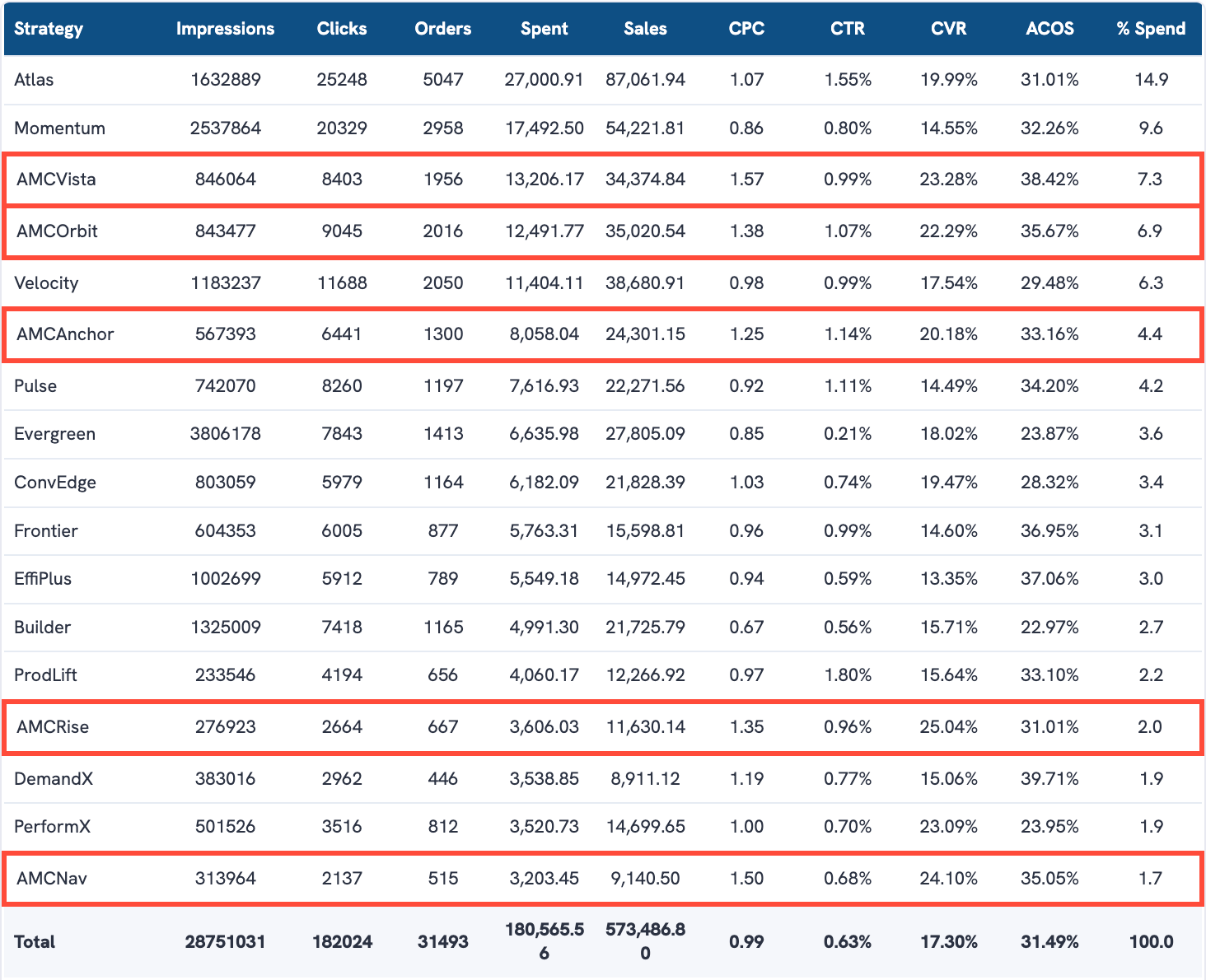
Ivan’s internal campaign analysis also showed several AMC-related strategies converting well above the account average.
For example, AMCVista and AMCOrbit reached 23.28% and 22.29% CVR respectively, versus a total account PPC conversion rate of 17.30%.
That gap shows us that AMC isn't just buying more traffic. It's bringing in shoppers with higher intent. And that conversion potential is what makes AMC useful for building ranking pressure and driving more organic sales.
2. Which AMC targeting to choose?
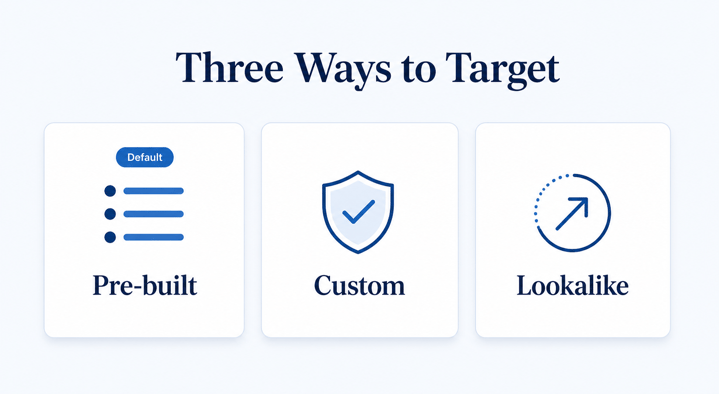
Despite having the option to build more sophisticated custom and lookalike audiences, Ivan saw his best results from Amazon’s three default audiences:
- Previous purchasers of the brand’s product
- Shoppers who clicked or added the brand’s product to cart
- High-interest shoppers based on recent shopping activity
That meant the next challenge wasn’t finding a more sophisticated audience. It was figuring out how to apply what was already working across a much larger account.
3. Creating AMC campaigns at scale
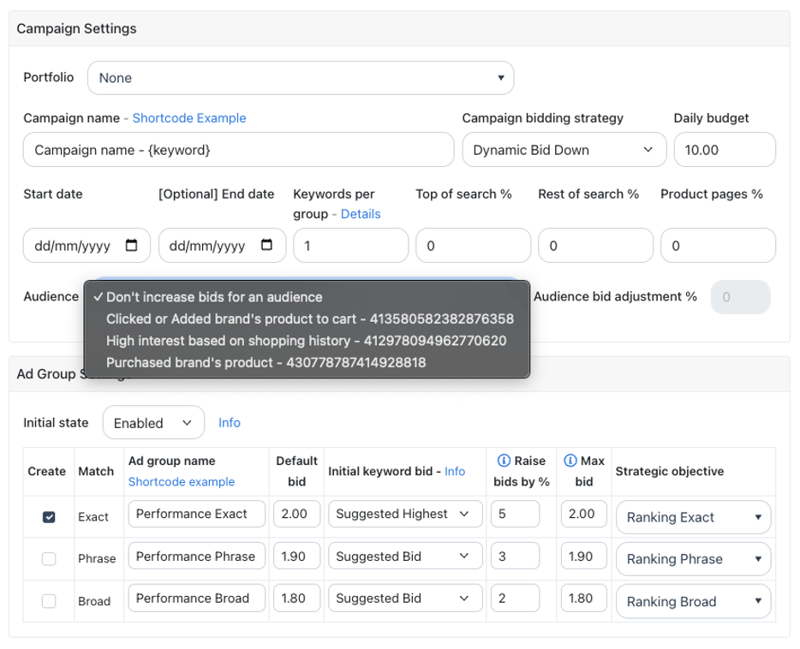
Scale Insights makes it easier to configure and launch AMC campaigns in bulk.
Building AMC campaigns one by one works initially, but it gets slow and messy once you expand across products, match types, and marketplaces.
Scale Insights’ mass campaign creator speeds that up by letting you easily select a pre-built audience, configure bids, and keyword groups in one workflow instead of repeating the same setup manually.
That means faster launches, more consistent campaign structure, and less operational drag as you scale.
4. Strategies to manage AMC campaigns and not overpay for traffic
If Ivan wanted these campaigns to keep generating ranking pressure, they had to remain economical enough to keep running.
That meant finding the lowest bid that could still generate traffic, concentrating spend in stronger hours, and pulling bids back when ACOS moved too far above target.
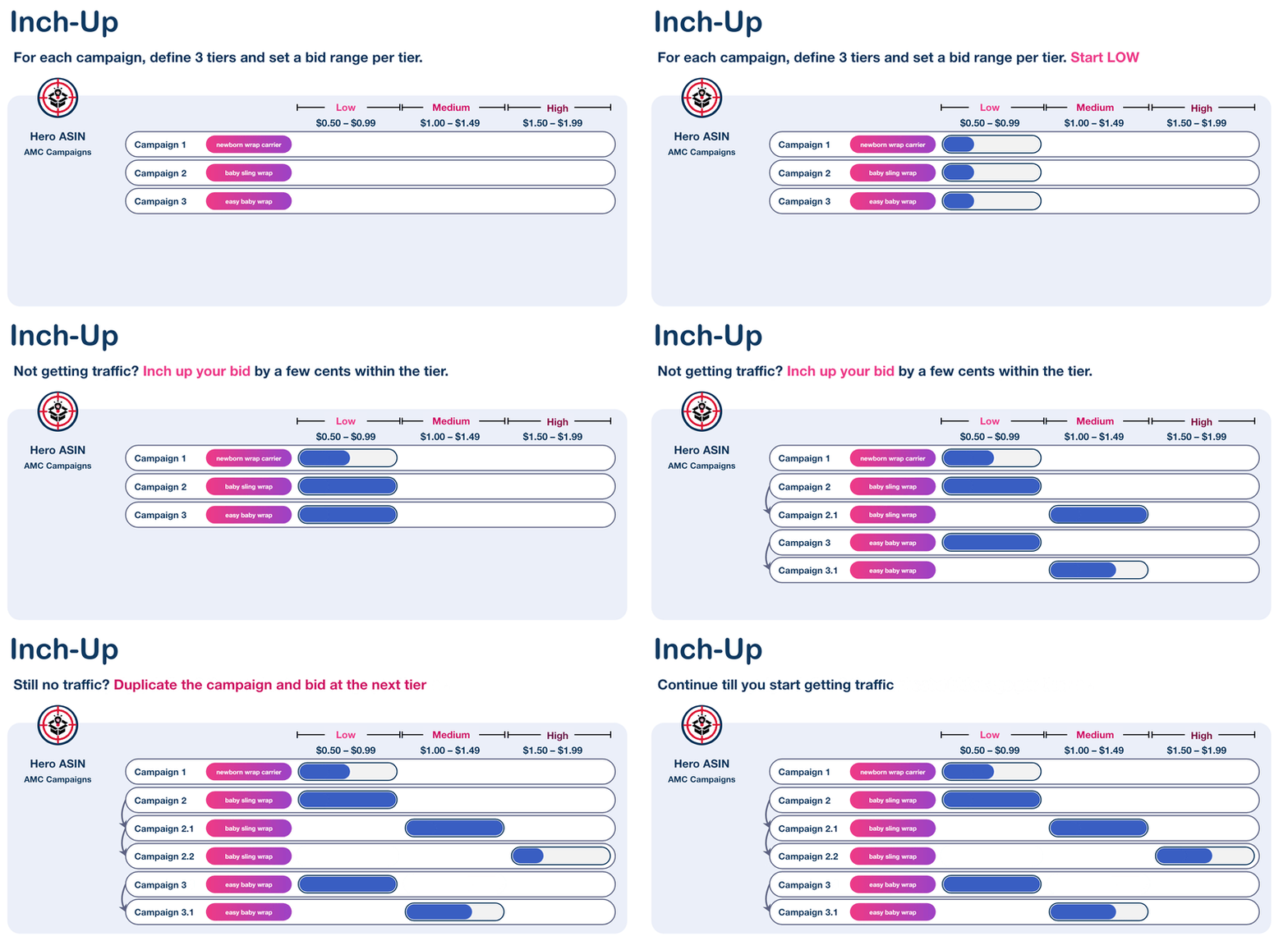 The goal of inch-up bidding is to discover the lowest bid that can start generating traffic.
Instead of jumping straight to an aggressive CPC, Ivan starts his campaigns lower and moves up in small, controlled steps until he finds the point where impressions and clicks start to come through.
That gave him a more efficient and controlled way to unlock traffic without paying more than necessary.
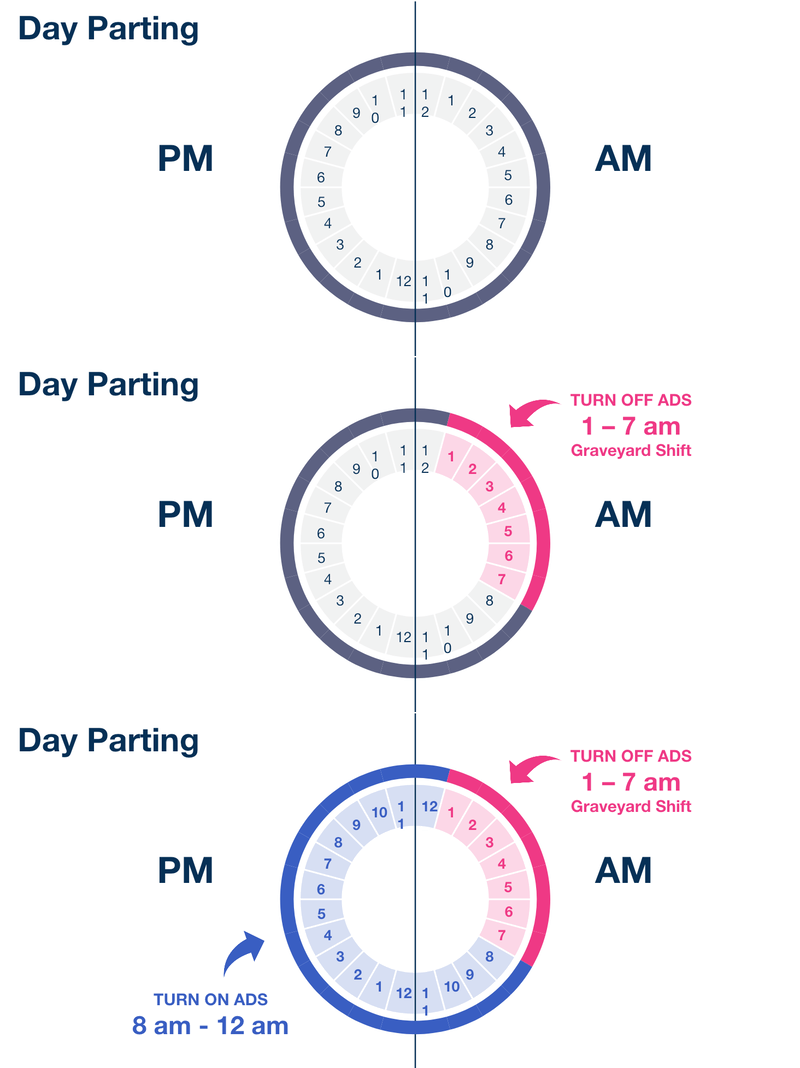 Dayparting helps reduce wasted spend by limiting exposure during historically weaker-performing hours.
Rather than treating every hour of the day equally, Ivan leans into time windows that are more likely to produce efficient sales and structures his campaigns around them.
That helped Ivan keep budget focused on the periods that have historically performed more efficiently.
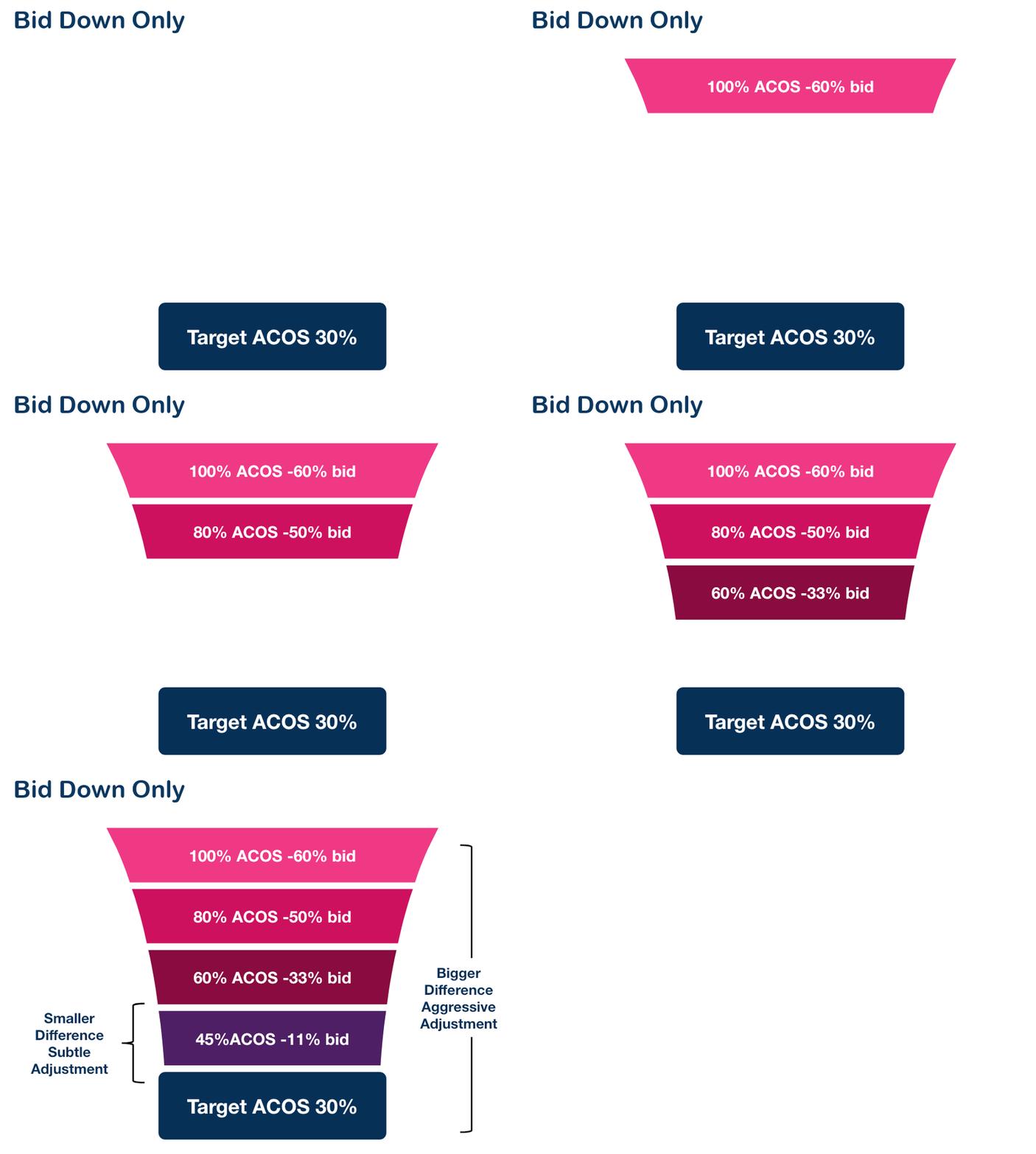 Bid-down-only logic adjusts bids based on how far performance is from the target ACOS. If ACOS is well above target, Ivan reduced his bids more aggressively.
If ACOS was only slightly above target, he made smaller adjustments, making it easier to guide performance back in line without overcorrecting.
Build Ranking Pressure to Grow Organic Sales
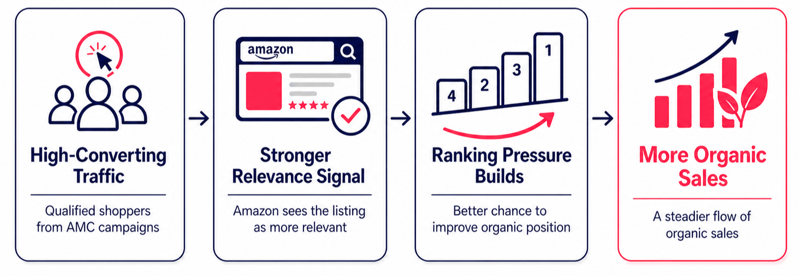
Better traffic quality can strengthen relevance, build ranking pressure, and support a steadier flow of organic sales.
Ivan’s logic was to keep better-converting traffic flowing consistently enough to build ranking pressure—without letting the economics of that traffic run away.
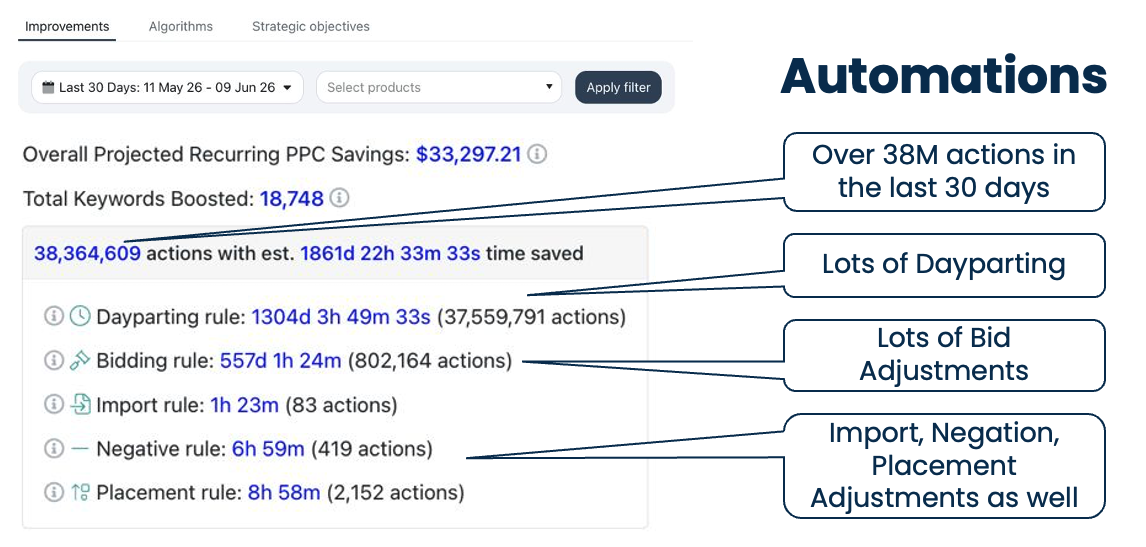
And to do it at scale, he needed a lot of automations. Here's a peek at what it takes to support this system:
Want help setting this up?
Reach out to the Scale Insights support team and we’ll walk you through putting this approach into practice.